Built by people who have lived it — for people who are ready to live differently.
Why R2R exists
Roads to Recovery exists because people leaving prison or stepping out of active addiction don't need another service that talks at them. They need a space that walks alongside them — run by people who understand, structured enough to make change stick, and grounded in the community they're actually going to live in.
The first months out of prison, the first months away from using, the first months trying to keep a job, a relationship, a roof over your head — those are the months where things either hold together, or they don't. That window is where R2R sits.
We don't do pity. We don't do fixing. We do structure, honesty, and a group of people pulling in the same direction.
Meet the founder
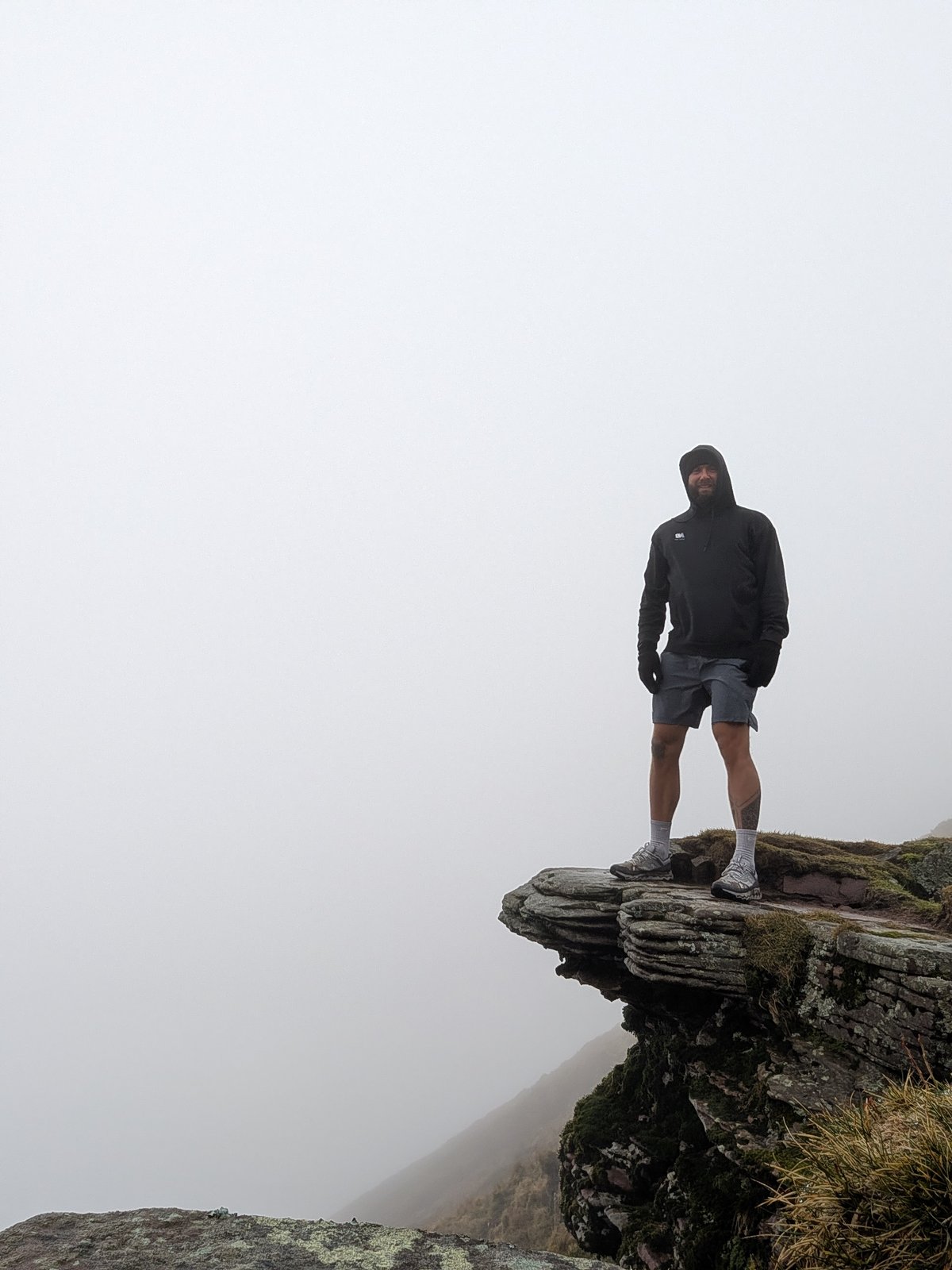
Richard Lawrence
Roads to Recovery was founded by Richard Lawrence, from the Forest of Dean.
Richard didn't come to this work through a textbook. He came to it through his own life — through the stuff he carried, through addiction, through time in prison, and through the long, unflashy work of building something steady on the other side. That's the reason R2R exists, and it's the reason the programme looks the way it does.
Inside HM Prison Service between 2021 and 2024, Richard held roles that meant something. He served as a trained Samaritans Listener, supporting people in crisis. He led peer support groups focused on mental health and recovery. He supported ACCT reviews for vulnerable individuals. He sat on the prison council representing peers. And he set up and ran incentivised substance-free living initiatives on the wing. That's where the idea that would become R2R first took shape: that people change fastest when they're next to someone who has walked the same road and isn't pretending otherwise.
Since coming out, Richard has been a peer mentor with VIA Recovery Charity since 2025 — running group sessions and introducing newcomers to recovery. Fitness and being in nature have been central to his own recovery — hiking, circuits and gym work, mountain biking, paddleboarding and surfing. That's the evidence behind R2R's activity pathways, which include kayaking and canoeing, mountain biking, and contrast therapy (ice bath and sauna), delivered through our partners as part of the programme.
He designed the full New Roads Ahead programme from first principles — the 12-week structure, the 87-page participant workbook, the twelve facilitator manuals, the referral pack, the risk assessments, the monitoring and evaluation framework — and leads the sessions himself as lead facilitator.
On the qualifications side, Richard is a Level 3 qualified Personal Trainer with Level 3 First Aid at Work, Level 2 Peer Mentoring, Level 2 Team Leadership, and NCFE Level 2 in Developing Enterprising Skills. He is currently studying towards Level 3 Exercise Referral and Level 4 qualifications in Advanced Nutrition and in Obesity & Weight Management — so that R2R is led by someone with real skills as well as real stories.
Before retraining, Richard worked for fifteen years in the construction industry — years that built the work ethic, reliability and problem-solving under pressure he now brings into R2R.
Roads to Recovery is the service he wishes had existed when he walked out of the gates.
Richard leads R2R as Founder and Programme Director, supported by a board of directors who believe in the mission.
Why we're a Community Interest Company
R2R is set up as a Community Interest Company (CIC). In plain English, that means we're a business — but we're a business that exists for the community, not for shareholders. Any income we generate gets reinvested into delivering and growing the programme.
That structure matters to us for three reasons:
- It keeps the service honest. There is no owner taking a cut.
- It protects the mission. The community purpose is written into what we are — it isn't optional.
- It makes us accountable. We report every year on what we've done and why.
No one does this work to get rich. We do it because it matters.
Five things sit underneath everything we do.
Peer-led
The people in the room have walked the road. That's not a marketing line — it's the delivery model.
Community-based
Change happens in the place you live, not in a clinic across town. R2R runs in the community and stays close to it.
Trauma-informed
We know most people who come to us have been through things they didn't ask for. We build the room around that — with clear boundaries, consent, and safeguarding woven in.
Whole-person
Addiction, offending, health, housing, relationships, identity — these don't exist in separate boxes. We don't try to fix one and ignore the rest.
Honest
No toxic positivity. No pretending recovery is a straight line. We're strength-based, but we're grounded. The measure of success is the next better move — not a perfect week.
What R2R is not
Being clear about this up front saves everyone time.
- R2R is not therapy. We don't provide clinical treatment or counselling. Where people need that, we help them find it.
- R2R is not leisure. Activities like mountain biking, kayaking and gym work are earned progression — purposeful, not rewards.
- R2R is not a soft touch. Participants are expected to turn up, reflect honestly, and do the work. The room is warm — it isn't loose.
- R2R is not a replacement for probation or recovery services. It sits alongside them and strengthens them.
Strength in Recovery, Hope in Community.
Our strapline is not decoration. It's the shape of the work.
Strength in Recovery
The strength is already inside the person walking through the door — our job is to help them find it, use it, and keep using it.
Hope in Community
No one does this alone. Hope isn't a feeling you generate by yourself. It's built between people — in the group, in a steady community that has room for you.
Ready to see the programme?
New Roads Ahead is the 12-week programme at the heart of everything R2R does.